Skip to content

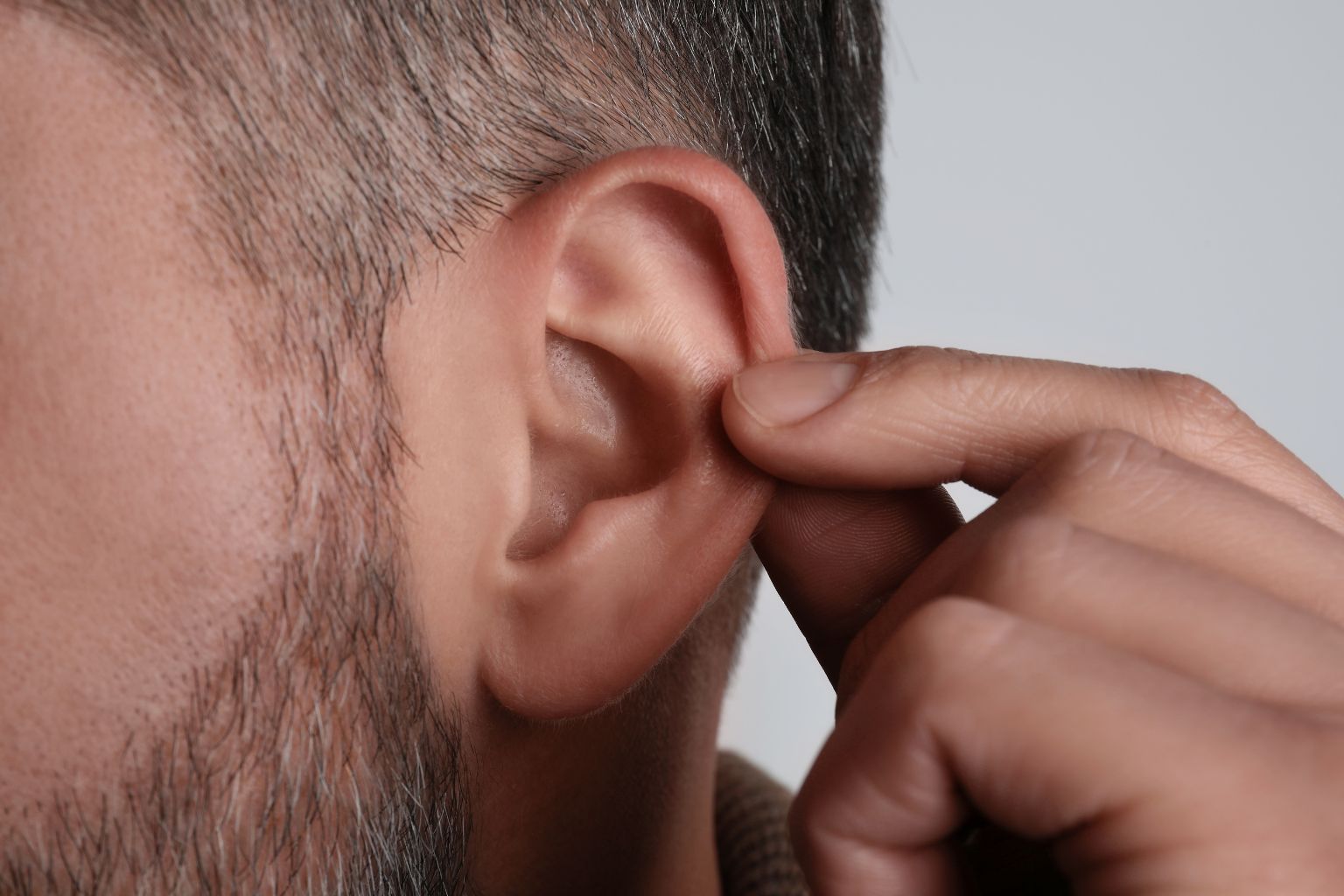
Ear fullness is the plugged, stuffed feeling that comes when air pressure behind the eardrum is off or something blocks the canal. Most causes are treatable. We look in the ear and test it to find out which one you have.
What makes an ear feel full
Most fullness starts with the Eustachian tube. It runs from the middle ear to the back of the nose and throat. It opens when you swallow or yawn to let air in and fluid out. When it swells shut, the air pressure behind the eardrum changes, and the ear feels stuffed.
Common causes:
- Colds and sinus infections. Swelling and mucus close the tube. The fullness eases as the congestion does.
- Allergies. Seasonal allergies and pet dander swell the same tissue.
- Earwax. Wax packed deep in the canal blocks sound and feels like a closed tube. A cotton swab pushes it further in. We offer ear wax removal in the office.
- Fluid or infection behind the eardrum. A middle ear infection (otitis media) brings fullness along with pain, and sometimes fever.
- Swimmer’s ear. Water trapped in the canal inflames the skin. The ear swells and aches. Read more on swimmer’s ear.
- Altitude and air pressure. Flights and drives into the mountains change the pressure faster than the tube can adjust.
- Jaw trouble. The jaw joint sits right beside the ear canal. A tight or irritated joint can feel like fullness in the ear.
- Ménière’s disease. The fullness comes in episodes, along with spinning dizziness, ringing, and hearing that rises and falls. See our page on Ménière’s disease evaluation.
- Sudden hearing loss. Fullness in one ear can be the first sign.
Other symptoms that come with it
Muffled hearing is a common one, because a blocked or fluid-filled ear passes less sound.
- Crackling or popping when you swallow (see crackling in the ears)
- Aching or itching in the ear
- Ringing in the ear
- Dizziness or loss of balance
- Drainage from the ear
- Fever
Fullness can show up in one ear or both. It can last hours or weeks, depending on the cause.
What to try at home
Start with whatever opens the Eustachian tube: swallow, yawn, or chew gum. Sipping water helps because each swallow gives the tube a chance to open.
If congestion is behind it, clear the nose. A saline spray or rinse works on swelling and mucus. Steam from a hot shower or a cool-mist humidifier at night thins the mucus. A warm washcloth over the ear eases aching. Drink water throughout the day.
Leave these alone:
- Cotton swabs. They push wax deeper.
- Ear candles. They do not remove wax and they can burn the ear.
- Blowing hard with your nose pinched. Forcing air this way can injure the eardrum.
When to get it checked
Call if the fullness lasts more than a week. Call sooner for any of these:
- Pain that gets worse
- Drainage from the ear
- Fever
- Dizziness or balance trouble
- Ringing that starts suddenly
- Fullness that keeps coming back
Sudden hearing loss in one ear is urgent. See a physician or urgent care right away.
What we do at our office
We look in the ear first, because wax and infection show up right away. Then we run tympanometry, a painless test that shows how the eardrum moves and whether fluid sits behind it. If sound is muffled, we test your hearing too.
For an infection, fluid that stays put, or anything else medical, we refer you to a physician.
How to keep ear fullness from coming back
- Treat allergies early.
- Keep your sinuses clear with saline and a humidifier.
- Dry your ears after swimming.
- Wear filtered earplugs on flights.
- Skip cotton swabs.
- Drink water throughout the day.
Frequently Asked Questions
What causes ear fullness?
Most often a Eustachian tube that has swelled shut from a cold or allergies. Earwax and fluid behind the eardrum are the other common causes.
How do I relieve ear fullness?
Swallow, yawn, or chew gum to open the tube, and clear your nose with saline. If it lasts past a week or comes with pain or drainage, call us.
Are there home remedies for ear fullness?
Saline spray and a humid room help when congestion is the cause. Packed earwax needs to be removed.
Can allergies cause ear fullness?
Yes. Allergies swell the lining of the nose and the Eustachian tube, and the ear feels stuffed.
Is ear fullness related to sinus issues?
Yes. The Eustachian tube opens at the back of the nose, so a sinus infection or congestion affects it directly.
If ear fullness has lasted more than a week, or comes with any sign above, call us at 719-633-2685 or book an appointment. We are at 4195 Centennial Blvd, Colorado Springs, CO 80907.